- English
- French
- German
- Portuguese
- Spanish
- Russian
- Japanese
- Korean
- Arabic
- Greek
- German
- Turkish
- Italian
- Danish
- Romanian
- Indonesian
- Czech
- Afrikaans
- Swedish
- Polish
- Basque
- Catalan
- Esperanto
- Hindi
- Lao
- Albanian
- Amharic
- Armenian
- Azerbaijani
- Belarusian
- Bengali
- Bosnian
- Bulgarian
- Cebuano
- Chichewa
- Corsican
- Croatian
- Dutch
- Estonian
- Filipino
- Finnish
- Frisian
- Galician
- Georgian
- Gujarati
- Haitian
- Hausa
- Hawaiian
- Hebrew
- Hmong
- Hungarian
- Icelandic
- Igbo
- Javanese
- Kannada
- Kazakh
- Khmer
- Kurdish
- Kyrgyz
- Latin
- Latvian
- Lithuanian
- Luxembou..
- Macedonian
- Malagasy
- Malay
- Malayalam
- Maltese
- Maori
- Marathi
- Mongolian
- Burmese
- Nepali
- Norwegian
- Pashto
- Persian
- Punjabi
- Serbian
- Sesotho
- Sinhala
- Slovak
- Slovenian
- Somali
- Samoan
- Scots Gaelic
- Shona
- Sindhi
- Sundanese
- Swahili
- Tajik
- Tamil
- Telugu
- Thai
- Ukrainian
- Urdu
- Uzbek
- Vietnamese
- Welsh
- Xhosa
- Yiddish
- Yoruba
- Zulu
What Is A Loveseat? Why Every Home Needs One
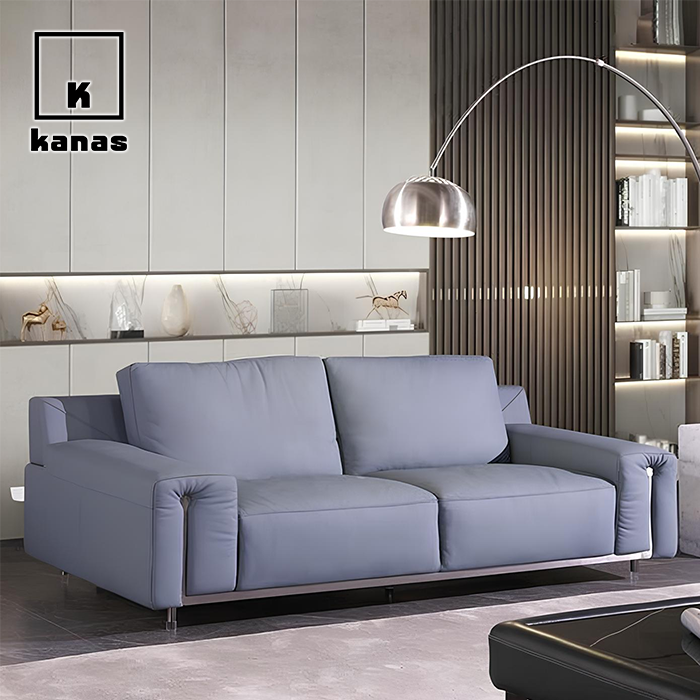
A loveseat is a small, space-saving piece of furniture made just for two people. Its width is usually between 52 and 72 inches. When it comes to floor plans, loveseats aren't as common as full-sized chairs. However, they offer executive-level comfort in smaller spaces, which makes them essential for flats in cities, boutique hotels, and modern offices. The blue leather love seat is the best in this category because it combines smart color psychology with the natural sturdiness of high-quality cowhide. Blue makes people feel safe and trustworthy, which are important qualities for areas that deal with customers. Leather furniture is better for people with allergies and keeps the temperature just right than fabric furniture.
Understanding What a Loveseat Is and Its Benefits

The Technical Definition of Loveseats in Modern Interiors
When it comes to furniture classification, loveseats are in a separate group. Standard three-seat sofas are 80 to 96 inches long, but loveseats are only 52 to 72 inches wide, so they can easily fit two people without taking up too much space. To fix what people in the business world call "scale mismatch"—the visual and functional problems that happen when big furniture gets in the way of natural traffic flow in small spaces—this relative difference has been made.
In small homes in cities, where every square foot is valuable, loveseats are used as main pieces of furniture instead of extras. Usually, kiln-dried hardwoods like maple or birch are used to build the frame. These woods are prepared to keep their 6-8% moisture content. This exact engineering keeps the furniture from warping when the humidity changes, which is an important thing to think about when sending furniture to places like the dry Middle East and the wet Southeast Asia.
Why Leather Upholstery Delivers Commercial-Grade Advantages?
The choice of material is what sets high-end loveseats apart from cheaper ones. Chromium tanning methods cross-link collagen fibers in top-grain and full-grain leather, making a matrix that is hard to tear or cut. Procurement managers put abrasion resistance at the top of their list when looking for materials for hotels, office buildings, and other high-traffic business areas. The Wyzenbeek scale, which is used to measure commercial-grade longevity, says that good leather loveseats can withstand more than 50,000 double rubs.
Total cost of ownership is directly linked to this success measure. Even though it costs more up front than cotton furniture, leather furniture lasts three to four times longer, which means it doesn't need to be replaced as often and saves money on shipping. Additionally, leather is hydrophobic, which means it doesn't let liquids soak in like fabric furniture would and leave lasting stains. This feature keeps the look spotless with little upkeep work, which is great for hospitality rooms where drinks get spilled all the time.
The Strategic Value of Blue in Commercial and Residential Settings
Color psychology affects how people see space and how they act in it. Blues from deep navy to cerulean make you feel calm and professional, which makes them perfect for executive rooms in businesses where casual meetings need an environment that balances ease and authority. The exact shade choice is very important. Navy gives off an air of seriousness that works well in law firms and banks, while lighter teal tones make people feel more comfortable, which is great for creative agencies and boutique hotel lobbies.
To get a stable blue color, you need to follow complicated coloring steps. In the past, blue paints were known to fade when exposed to UV light. These days, manufacturers fix this problem by using phthalocyanine-based dyes along with fixing agents that keep the color molecules inside the leather's fibers. Blue Wool Scale scores of 5+ are required for lightfastness according to quality standards. This makes sure that the color depth stays the same even in places that are in direct sunlight.
Styles, Design Ideas, and Care Tips for Blue Leather Loveseats
Architectural Styles and Design Integration Strategies
Modern minimalist loveseats have straight lines, arms that aren't too high, and metal legs finished in brushed nickel or matte black. These styles blend seamlessly with open-plan offices that feature an industrial look. Floors made of polished concrete and visible pipes give the room weight, so furniture with less visual mass is needed. Traditional styles, on the other hand, have padded backrests, rolled arms, and turned wooden legs that come in espresso or walnut finishes. These features work well in high-end housing projects and historic hotel makeovers where brand identity needs to be preserved through classical details.
Mid-century modern versions strike a balance, with tapered wooden legs and soft shapes that evoke Scandinavian design from the 1950s. Additionally, a blue leather love seat can serve as a statement piece, offering a sleek, durable, and stylish option for both home and commercial spaces. With these design elements in mind, interior designers and project managers can choose loveseats that complement the larger narrative of the space. Placing loveseats across from standard sofas helps create conversational groups in hotel lobbies, while positioning accent chairs on either side of standard sofas brings balanced harmony to business waiting areas.
Maintenance Protocols That Extend Product Lifecycle
Taking care of leather is different from taking care of fabrics. Using microfiber cloths to dust once a week gets rid of small particles before they get stuck in the surface grain. Leather cleaners with the right pH level are used once a month and are sprayed with soft brushes. Dry cloths are then used right away to buff the leather. This keeps water from getting into seams and breaking down the glue. Every six months, conditioning treatments add back the natural oils that keep the leather from drying out and breaking. This is especially important in climate-controlled business buildings where HVAC systems lower the humidity in the air.
Commercial-grade loveseats have colored leather finishes with protected topcoats that stop dye transfer from denim, which is known as "crocking" and happens when indigo particles move to lighter-colored surfaces. Quality assurance testing based on AATCC 8 standards confirms that this flaw can't happen, which protects investments in areas with a lot of traffic. Professional restoration services can fix small damage like dyeing scratches or separating seams without having to redo the whole thing. This makes the furniture last longer and gives bulk buyers a better return on their investment.
Blue Leather Loveseat vs. Other Seating Options: Making Informed Decisions

Comparative Analysis Across Material Categories
Procurement pros look at a number of performance vectors when choosing seating choices. When it comes to sturdiness and ease of upkeep, leather loveseats are the best, but they cost more up front than polyester or linen fabrics. Fabric soaks up water, holds allergens, and starts to wear out after 18 to 24 months in business settings. The thick structure of leather keeps these problems away, so the look stays the same with little work. Recliners have ratcheting frames and controlled parts that make them more complicated mechanically.
This makes them unsafe for public places where people aren't being watched. Standard couches have more seats, but they are less flexible in terms of where they can be put. For example, a three-seat sofa can't fit through small hallways in older buildings, which limits where it can be put. Most people choose brown leather love seat chairs because the earth tones hide small stains and give the leather a nice color over time. Blue alternatives set brand identities apart and make visual statements that stand out in competitive hotel markets where beige furniture tends to mix in.
Cost-Benefit Calculations for Bulk Procurement
Different price levels are based on the types of materials used and how they were made. Basic bonded leather items cost $400 to $600 each, but they delaminate after three years, so they're not really saving you money. Mid-range top-grain leather loveseats that cost between $1,200 and $1,800 are a good mix between quality and price. They are good for updating office furniture or mid-range hotel companies. Premium full-grain choices that cost more than $2,500 are aimed at high-end markets where furniture can communicate brand positioning just as effectively as building finishes. Volume savings have a big effect on the total cost of acquisition.
Orders of 50 or more units usually get discounts of 15 to 20 percent, and promises of 200 or more units get prices that are close to 30 percent less than retail. Organizations can better control their cash flow during large-scale renovation projects when they use payment terms like net-60 billing and financing models that spread costs out over four fiscal quarters. When buying managers and project managers understand these price changes, they can make competitive deals that meet quality standards and stay within budget.
How to Source and Purchase the Best Blue Leather Loveseat?
Supplier Vetting and Compliance Verification
Figuring out which blue leather love seat companies are trustworthy takes more than just comparing prices. Established companies keep licenses that show they follow the rules. These include ISO 9001 quality management systems, REACH registrations that make sure chemicals are safe for use in Europe, and CA TB 117-2013 standards for flammability that are needed in California and are being accepted more and more across the country. Factory exams by outside companies like Bureau Veritas or SGS check claims about working conditions and output capacity. Suppliers should give thorough information, such as the thickness of the leather (1.2mm to 1.4mm for business use), the way the frame is put together (corner blocks should be doweled, glued, and screwed for strength), and the density of the foam (2.0 pounds or more per cubic foot for seating areas).
It is very important to be clear about wait times. Standard production runs last between 45 and 60 days, but special OEM orders with specific sizes or proprietary blue dye formulations may take 75 to 90 days. When suppliers show batch uniformity through dye lot management, the cosmetic flaw known as "panel variation" is avoided. This is when different pillows show noticeable color differences when lit with full-spectrum light.
Strategic Procurement Actions Maximizing Value
B2B sites make it easier to find suppliers, but you have to be careful. Verified sellers with transaction histories and customer reviews lower buying risk compared to newly registered companies that haven't been in business for long. Direct factory involvement through visits to manufacturing hubs like Foshan, China, where Kanas Furniture has a 40,000-square-meter plant, lets you see the quality for yourself and build relationships that can't be done through email. Trade shows like High Point Market and Maison&Objet make it easier to compare many suppliers at once, which lets purchasing teams look at many makers in a short amount of time.
By negotiating the terms of the warranty, you can protect yourself against problems with the way the product was made. Usually, the guarantee covers frame stability for 12 to 24 months and spring systems for 36 months. When managing foreign supply chains, after-sales service infrastructure is very important. For example, suppliers with North American service centers can handle warranty claims without having to ship expensive parts abroad. Payment plans that include letters of credit protect both buyers and sellers. The buyers are protected in case the goods aren't delivered, and the sellers get their money back after the shipment is confirmed.
The History and Future Trends of Leather Loveseats
Evolution from Artisanal Craft to Industrial Production
Leather furniture has roots in ancient guilds, where tanners and upholsterers had separate jobs. As "courting benches," loveseats were first made in the Victorian era to keep single people close while they were dating. Mechanization during the industrial revolution changed furniture from being made to order to being mass-produced. As suburbs grew after World War II, people needed smaller pieces of furniture for their sitting rooms. This made loveseats fixed fixtures in many homes.
As globalization grew in the late 20th century, production moved to Asian industrial hubs where cheaper labor and easier access to materials gave companies a competitive edge. Modern supply chains combine the best Italian leather tanning techniques with the most efficient Chinese production methods and North American design ideas. This makes goods that are a balance between Old World skill and New World scalability. Manufacturers are continuing to change as they use CNC cutting tools, robotic frame assembly, and computerized pattern optimization. These tools cut down on waste while keeping the handmade features that buyers value.
Emerging Innovations Shaping Future Specifications
Material innovations in the furniture industry are increasingly driven by concerns about sustainability. Chrome-free tanning methods that use veggie tannins or synthetic substitutes are better for the earth while maintaining the performance of leather. Used leather scraps are glued together with binding agents to create recycled leather products. These are more affordable options that use less new leather. Smart furniture integration also plays a key role, adding features like USB charging ports, charging pads for wireless devices built into the arms, and modular designs that allow loveseats to connect with extra pieces as space needs change.
Next-generation designs for online work will be based on ergonomic studies. For instance, deeper seats will make it easier to use a laptop, built-in lumbar support will help your lower back during long sitting sessions, and adjustable headrests will support various sitting positions. A blue leather love seat could integrate these features while maintaining a stylish and sustainable design. Companies that plan their purchases around these trends will be better positioned to compete, especially since younger buyers, who prioritize sustainability and technology integration, are the primary decision-makers in both home and business markets.
Quality Control of Blue Leather Love Seat

Critical Inspection Points for Procurement Professionals
Quality assurance methods keep purchases in large amounts of stock from being damaged. Colorfastness testing according to AATCC 8 guidelines makes sure that dyes are stable, which is very important for blue colors that have a history of moving around. When rubbed with normal white cotton cloth while under controlled pressure, acceptable lots show little color transfer. When using the AATCC 16 method for UV light protection tests, leather samples are put through 40 hours of fast aging that is the same as being in the sun for months. When compared to cheaper options, premium grades don't fade much and keep their color sharpness for weeks after installation.
According to ISO 5402, flex resistance testing bends leather samples over and over at stitching points and arm joints, which are places where material stress is highest. Good leather can be bent over 50,000 times without cracking at the finish, which is an imperfection that makes the leather look bad and speeds up wear and tear. By simulating transportation shocks, frame drop tests make sure that the joints are still strong when they are loaded with impact. When samples are dropped from fixed heights, there shouldn't be any joint split or failure of fasteners. Shade matching makes sure that all panels come from the same dye lots, so there is no difference between the seat cushions, backrests, and arm covers.
Implementing Inspection Protocols in Supply Chain Management
Third-party inspection services make sure the quality of the goods before they are shipped, so there are fewer disagreements and more expensive returns. Statistically sound sampling methods are used for pre-shipment checks of 10 to 15 percent of production runs. Inspectors compare measurements to specs, take pictures of problems, and write thorough reports that show agreement rates. Supervision of the loading of containers makes sure that the right packaging is used, with protection films on furniture, foam blocks in the corners to strengthen them, and moisture barriers to stop damage from humidity during sea transit.
Putting these checkpoints in place costs 1% to 2% of the order value but keeps losses from going over 15% due to rejected shipments or customer returns. Including quality terms in purchase agreements sets up ways to fix problems. For example, defective units can be replaced, small defects that don't affect function can be partially refunded, and the buyer has the right to cancel the whole order if the failure rate goes over agreed upon limits. These legal rights, along with strict inspection rules, make sure that blue leather loveseats that arrive at warehouses meet the high standards that procurement managers depend on for their jobs.
Conclusion
When room is limited and you need stylish seating without taking up the footprint of a full sofa, loveseats are the best option. Blue leather love seat options offer special benefits due to their color psychology, long-lasting materials, and versatility in design for both home and business use. Understanding technical details like leather thickness and tanning methods, as well as frame construction and colorfastness grades, helps procurement professionals make smart choices that balance quality with budget considerations.
Strategic sourcing practices, such as verifying suppliers, maintaining compliance records, and implementing quality control procedures, protect investments and ensure that goods meeting international standards are delivered on time. As the furniture market moves toward more eco-friendly and tech-savvy pieces, companies can meet new demands by collaborating with manufacturers that can demonstrate their ability to innovate and produce large quantities of furniture. This way, leather loveseats can continue to look great for years to come.
FAQ
Q1: What makes a loveseat different from a regular sofa?
A: Loveseats are 52 to 72 inches wide and are made to fit two people. Standard couches, on the other hand, are 80 to 96 inches wide and can fit three or more people. Because of this size difference, loveseats can fit in places where full couches would be too big or too distracting to look at. Quality loveseats have the same cushion depth and back support as their bigger peers, so their small size doesn't affect their comfort.
Q2: How long does a leather loveseat typically last?
A: When used normally in a home, high-end leather loveseats made with full-grain or top-grain hides and wooden frames will last 15 to 25 years. Installations in businesses with mild traffic usually keep working for 8 to 12 years. Regular cleaning and conditioning as part of proper care greatly increases these ranges. Ignoring them speeds up the wear and tear. Quality of the frame is also very important—kiln-dried hardwood with proper welding lasts decades longer than plastic materials.
Q3: Can blue leather furniture work in traditional interior designs?
A: When combined with traditional styling elements such as rolled arms, padded backs, and turned wooden legs in rich finishes, navy and midnight blue leather looks great. With lighter blue shades, modern touches are added while traditional shapes are kept. The key is to find a balance between the modern feelings that blue brings to mind with traditional furniture architecture and other decorative items like Persian rugs or oil paintings in gold frames.
Q4: What should I look for when inspecting leather quality?
A: Check the uniformity of the grain. High-quality leather has natural variations like pores and a light texture, while corrected-grain or bonded leather looks like it was made to be regular. To see how flexible the leather is, slightly bend one of the corners. Good leather bends without cracking on the surface. Smell shows how well the leather was processed. Natural leather has a mild, natural scent, while chemical smells mean that the coloring or finishing processes were not done properly. Ask for details like the grade of the hide, the thickness, and certificates of compliance.
Q5: How do volume discounts work for bulk furniture orders?
A: When a customer buys 20 to 49 units, they usually get a 10-12% discount, when they buy 50 to 99 units, they get a 15–18% discount, and when they buy 100 or more units, they get a 20–25% discount. Custom OEM orders with special requirements may have minimum order amounts of 50 to 100 units, but they allow for more personalization, such as using special blue dyes, adding a logo, or changing the size. When you buy more, you can negotiate the terms of payment. Along with standard deposit structures, you can also choose net-60 or net-90 billing.

Partner with Kanas for Premium Blue Leather Love Seat Supply
Kanas Furniture makes blue leather love seat units for businesses that meet the strict standards that procurement workers around the world expect. Our 40,000-square-meter factory in Foshan uses both high-tech CNC machines and trained labor to make furniture that is both aesthetically pleasing and long-lasting. As a blue leather love seat maker that works with big stores like Walmart and Costco, we have strict quality control measures in place. Before being shipped, every unit goes through colorfastness testing, frame stress analysis, and measurement verification.
Our OEM and ODM services can meet specific needs, such as making dyes that match company brand palettes or changing sizes to fit particular architectural requirements. Our North American-focused logistics network guarantees on-time deliveries, and our volume price models and flexible payment terms help you get the most for your money. Email our team at sc@kanasfurniture.com to talk about the needs of your project, get examples, or set up a tour of our plant. We give clear quotes, detailed technical specs, and compliance paperwork that makes it easier for sourcing managers who are in charge of organizing furniture setups at multiple sites to make decisions.
References
1. Miller, J. (2021). Commercial Furniture Specification: Materials, Standards, and Procurement Best Practices. New York: Interior Design Publishing House.
2. Anderson, K. & Chen, L. (2020). "Leather Upholstery in High-Traffic Environments: Durability Assessment and Lifecycle Cost Analysis," Journal of Hospitality Furniture Design, 15(3), 127-145.
3. Roberts, M. (2022). Color Psychology in Corporate Interior Architecture. London: Workspace Design Institute Press.
4. International Furniture Standards Association. (2023). Quality Control Protocols for Upholstered Seating: Testing Methodologies and Compliance Requirements. Geneva: IFSA Technical Publications.
5. Thompson, S. (2019). "Evolution of Compact Seating Solutions: From Victorian Courting Benches to Modern Loveseats," Furniture History Quarterly, 42(2), 88-106.
6. Williams, D. & Zhao, H. (2023). Global Furniture Supply Chains: Sourcing Strategies for B2B Procurement Professionals. Singapore: Asia-Pacific Business Press.
Learn about our latest products and discounts through SMS or email