- English
- French
- German
- Portuguese
- Spanish
- Russian
- Japanese
- Korean
- Arabic
- Greek
- German
- Turkish
- Italian
- Danish
- Romanian
- Indonesian
- Czech
- Afrikaans
- Swedish
- Polish
- Basque
- Catalan
- Esperanto
- Hindi
- Lao
- Albanian
- Amharic
- Armenian
- Azerbaijani
- Belarusian
- Bengali
- Bosnian
- Bulgarian
- Cebuano
- Chichewa
- Corsican
- Croatian
- Dutch
- Estonian
- Filipino
- Finnish
- Frisian
- Galician
- Georgian
- Gujarati
- Haitian
- Hausa
- Hawaiian
- Hebrew
- Hmong
- Hungarian
- Icelandic
- Igbo
- Javanese
- Kannada
- Kazakh
- Khmer
- Kurdish
- Kyrgyz
- Latin
- Latvian
- Lithuanian
- Luxembou..
- Macedonian
- Malagasy
- Malay
- Malayalam
- Maltese
- Maori
- Marathi
- Mongolian
- Burmese
- Nepali
- Norwegian
- Pashto
- Persian
- Punjabi
- Serbian
- Sesotho
- Sinhala
- Slovak
- Slovenian
- Somali
- Samoan
- Scots Gaelic
- Shona
- Sindhi
- Sundanese
- Swahili
- Tajik
- Tamil
- Telugu
- Thai
- Ukrainian
- Urdu
- Uzbek
- Vietnamese
- Welsh
- Xhosa
- Yiddish
- Yoruba
- Zulu
How to Choose a Leather Sofa Set: Expert Buying & Care Guide
Before buying leather chairs for the office or home, you should think about how well they fit in with the rest of the decor and how long they will last. For places where a lot of people walk, a brown leather furniture set with sofas, loveseats, and chairs made from earth-toned hides is a great deal. This set of matching pieces looks great and is simple to clean, which is why buyers, interior designers, and furniture sellers love it so much. Find out about the materials, how stable the source is, and how to properly care for them. This will help your investment last and meet customer expectations in business, leisure, and retail settings.
Understanding Brown Leather Furniture Sets: Types, Benefits & Styles
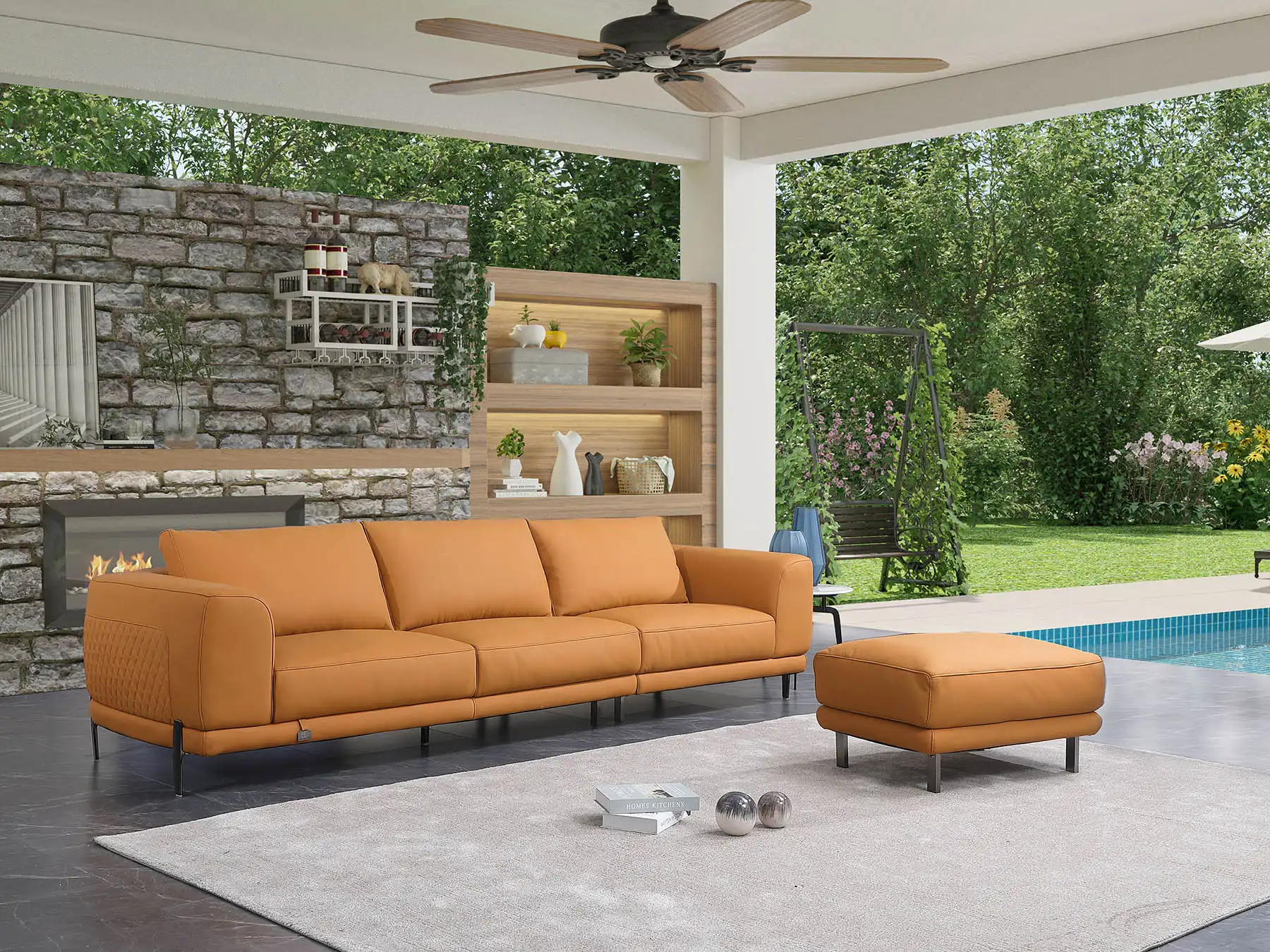
What Defines Quality Leather Furniture Collections?
To make a high-end leather furniture set, you need to know how to build it and how to choose the right hide. The leather on a good-quality brown leather furniture set will usually be a mix of shades from cognac and tan to espresso and chocolate. There are times when each of these colors is better than the others. Instead of cloth choices that keep stains and smells, real leather doesn't soak up water and gets its own unique color over time.
If you look at the different ways hides are worked with, you can tell the quality difference. Full-grain leather is the best because it keeps wounds that have closed and the structure of the grain. It can also hold more tension than other leathers; stitch tear tests show it can hold more than 200N. This material doesn't get worse over time; instead, it gets better. This is helpful in work settings where people touch furniture all the time. Top-grain types are made to look even by lightly cleaning them. This makes them good for business settings where many pieces need to look the same.
The chemicals that make up brown colors make them really good at what they do. Researchers who look at how long clothes last have found that earth-toned dyes are better at blocking UV light than lighter or brighter colors. On the normal Grey Scale tests, brown leather keeps its color for about four to five years. In rooms with a lot of natural light, this trait is very important because people often change rounds too soon because they are afraid of fading.
Material Performance Comparison
When you look at leather next to other furniture products, you can see that they don't make as much money. We looked at three main groups of performance measures that are important and have an effect on the total cost of ownership:
Permeability and Comfort: Real leather's open cell structure lets water vapor pass through, so it doesn't stick to your skin like vinyl or bonded leather does when you sit for a long time. This is why leather is better for office chairs and places that need to make a good first impression, like those that clients see.
The standard Martindale test: This test says that commercial-grade leather should be able to withstand at least 50,000 double rubs without losing its quality. Most good brown leather seat sets last longer than this, and the best full-grain leather ones last 100,000 rounds or more. When the weights are the same, fabric furniture generally breaks after 25,000 to 40,000 rounds, which means it needs to be changed twice as often.
Leather that has been properly finished: It doesn't soak up water, so it's easy to clean with wet cloths and pH-neutral treatments. Fabric alternatives need special tools for extraction and expert cleaning services to get rid of dirt that is deeply embedded. This is a big problem in restaurants where people often have food and drinks out.
Style Categories for Different Business Environments
Design freedom is a key benefit of leather furniture that you can use for a variety of projects. For brand positioning, traditional styles with rolled arms, tufted backs, and nailhead trim work well in places like law offices, banks, and the rooms of high-end hotels. These pieces are heavy because of the warmer brown tones, like mahogany or cordovan.
This style is popular in tech companies, co-working spaces, and small shops that cater to younger customers. It has straight lines, a low profile, and metal legs that stick out. Medium browns like caramel and cognac look good with modern buildings and keep you warmer than stark black leather.
Transitional styles are in the middle. They have simple shapes, arms that are slightly rounded, and sizes that can be changed to match different home design ideas. This flexibility helps builders who are putting up office space on the speculative market and hotel chains that want to keep their brand uniform across sites from different design eras. There is less chance that a mid-tone brown leather furniture set in a transitional style will look out of date, and it can still meet the needs of many renters.
How to Choose the Right Brown Leather Sofa Set: Criteria & Decision-Making
Establishing Procurement Requirements
Strategic furniture procurement begins by understanding several practical factors that influence the selection process. Space constraints, traffic patterns, and user demographics enable informed decision-making. A brown leather furniture set may suit different applications—hospitality venues requiring lobby seating replacement versus corporate offices furnishing executive suites—each with distinct performance requirements.
Finding out how much traffic there is can help you decide which hides to use and how strong the frames need to be. In areas where more than 200 people come every day, you need full-grain leather with commercial-grade frames made of kiln-dried hardwood (8–12% moisture content) and corner blocks. On a normal home building, top-grain leather can be used in private rooms with few guests. This lowers the cost per unit without lowering the durability.
When you plan a place, you need to think about more than just how it fits in terms of size. Delivery plans and how hard it is to set are also important. When there isn't much room for elevators or halls, modular plans can be useful. Single-piece fixed chairs are more stable when they are installed permanently. Procurement managers should ask for full specs from sellers during the review process to avoid shipping problems that cost a lot of money. These should have the size of the box, its total weight, and directions on how to put it together.
Material Quality Assessment Framework
There are technical signs that can tell you the difference between leather types and also tell you how well the leather will work in the long run. We think candidates should be judged on these things that can be measured:
Hide Thickness and Consistency: For high-end furniture leather, the best thickness is between 1.2mm and 1.4mm. This is the right amount of softness and toughness. If the material is less than 0.9 mm thick, it's likely that the leather has been fixed grain or split, which means it won't last for business use. If you ask how thick all of the furniture's surfaces are, you can see that the backs and side panels are made of cheaper materials that you can't see.
Methods for Dye Penetration: The aniline and semi-aniline methods use dyes that dissolve in water and go deep into the skin fibers, leaving the skin's natural shape and flexibility. It takes time for these high-end finishes to get a rich sheen, but they need to be conditioned often. A coat is put on the outside of pigmented leather to even out the color and make it less likely to get stained. This makes it good for places where there is a lot of dirt. Figuring out how much care the client is willing to give helps match the type of finish to the way it will be used.
Colorfastness Verification: To check the colorfastness, get a Crockmeter test report that shows numbers for both wet and dry rub fastness. A good grade of brown leather is at least Grade 4, which keeps the dye from getting on people's clothes, which is a big problem in places like hospitals and public parks. Goods that don't pass tests are likely to be sent to suppliers who don't want to show proof.
Supplier Credibility Evaluation
You need to do more than just send price offers and samples of your products to build trust. People who buy things for a living use a variety of proof methods to find out how reliable a seller is and how well a long-term relationship will go.
Files with certifications show how well a business follows rules for making things and can enter new markets. To get into the European market, you have to follow REACH rules about dangerous chemicals. Getting ISO 9001 quality management certification shows that you can plan and control your processes. Approvals for things like FSC-certified wood and low-VOC glues have a bigger effect on what companies buy as the standards for sustainability reports rise.
Making sure that production skills can be checked keeps big tasks from failing to deliver. There are many ways to see how a plant works, how many people work there, and how quality control is done when you go on a tour. Kanas Furniture has a production base of 40,000㎡ and more than 400 trained workers. This gives hotel groups or store chains the size they need to manage shipping across various sites. Smaller businesses may have fair prices, but they don't have the extra room needed for big orders or jobs that need to be done quickly.
Professional makers are different from selling companies because they have the infrastructure for service after the sale. For business use, the warranty should cover at least two years and say how to make a claim. It should also say when new parts are ready. Well-known manufacturers keep extra frame parts and leather that matches in stock so that repairs can be done right away. On the other hand, importers who depend on outside sources can't offer long-term help for a brown leather furniture set.
Care and Maintenance Tips for Brown Leather Furniture Sets

Daily and Weekly Cleaning Protocols
Taking care of furniture on a daily basis will make it last longer and look better, which is important in public areas where people can see it. Cleaning that reacts with dirt that is already there fixes damage that has already been done. Take care of things before they get dirty so that dirt and grime don't get into leather surfaces or damage protected finishes.
For simple daily care, all you need are soft microfiber cloths that don't have lint and to dust the surface often. When gritty dirt is pressed between leather and people, it wears down faster at the points where the two meet. Places of business that get a lot of foot traffic can benefit from being quickly cleaned up in the morning before the business opens. This keeps the dust from getting too big. The simple steps below can be done on each group of furniture in less than five minutes. They also cut down on the number of times the furniture needs to be restored.
Once a week deep cleaning gets rid of the lotions, oils, and organic waste that build up when people touch the surface. By following the manufacturer's instructions for making a pH-neutral leather cleaner solution and wiping it on with damp, not wet, cloths, you can get rid of deep dirt without making the leather too wet. First, use dry cloths to buff the fabric right away. This will get rid of any moisture that might get into the seams or gather in the weave valleys. We stress the "damp wipe" method when we train our staff because too much water changes the grain and lets mold grow in cushion cores.
With these steady steps, the natural features of a brown leather furniture set that make it valuable are kept. The hide's ability to pull up is kept up by cleaning it often. The natural oils in the hide move around when it is stretched, which makes the color depth change in beautiful ways. Even if a professional tries to fix it, leather will lose its shape and look flat and dead if you don't take care of it.
Addressing Common Damage Issues
Even if you take care, mistakes will still happen at work that need to be fixed. When you know how to handle problems correctly, small issues don't get worse and cause damage that needs to be fixed.
Liquid Spills: Most liquids can be cleaned up right away with absorbent cloths before they do any damage. Do not rub, as this can make germs and dirt spread to other parts of your body. This method usually works for spills that are water-based, like juice and coffee. But if the spill is oil-based, you might need a different leather cleaner. Finishes don't get ruined by chemicals that don't work well together when cleaning products are tested on areas that can't be seen.
Surface Scratches: Handheld hair dryers can help get rid of light scratches on leather by slowly warming it up. This is because heat changes the way natural oils move and leather threads get smaller. This method works especially well on aniline and semi-aniline finishes because they have waxes that protect them and can fix themselves. Deep gouges that go through the grain layer need to be fixed and colored by a professional.
Ink Marks: Heavy use of alcohol-based liquids on cotton swabs can get rid of most pen lines. Move the mark from the sides to the middle to keep it from getting bigger. Rubbish that is too rough will remove both the ink and the protective finish, so this process needs time and care. Someone who knows how to use special solvents that you can't buy in shops might be the only one who can fix permanent pens and dye-based inks.
Long-Term Preservation Strategies
To keep the quality of leather after the first time it is installed, you need to know about outside factors and be careful. Leather changes quickly because it is made of natural materials. No matter how well you take care of it, it can stay soft and bendy or harden and break.
Conditioning goods bring back natural oils that have been worn away by use and exposure to the elements. Aloe vera or another similar moisturizer gets into the fibers of the hide and keeps them flexible so they don't break. This is what makes good leather cleaners. How often you treat it depends on how hot or cold it is and how often you use it. Like, places that are dry and don't have much humidity need to be treated every three months, but rooms that are kept at a constant temperature may only need to be treated every six months. It's just as important to be moderate as it is to wash your car regularly. Over-conditioning leaves a film that dirt sticks to.
Keeping the weather in check can make leather last a lot longer. The hide will stay stable as long as the temperature stays between 60°F and 75°F and the humidity stays between 40 and 55%. The surface cracks when the leather is too dry (less than 30% humidity). The fibers lose water and shrink. But when the humidity is above 70%, mildew grows faster and the glues that hold cloth to frames become less strong. Buildings that are used for business and have HVAC systems can easily keep these levels stable, but holiday homes or buildings that are only used sometimes need extra humidifiers or dehumidifiers.
Putting brown leather furniture set items in the sun is the main thing that can damage them. Direct UV rays still break down leather over time, even though lighter colors fade faster than dark ones. Photo-oxidation hardens surfaces and changes colors. To stop this, move furniture away from windows that aren't covered or cover windows with things that block UV light. In order to keep the sun's damage from concentrating in one area, you can move chairs and groups of furniture around every so often.
Procurement Strategies for Buying Brown Leather Sofa Sets: From Budgeting to Delivery

Understanding Price-to-Value Relationships
It's important to know the difference between cutting costs and adding value when giving a strategy budget. When you buy cheap leather furniture, it's often made with compromises that make it more expensive to own in the long run. It's possible that the furniture needs to be changed too soon, needs too much maintenance, or has unhappy customers who hurt the brand's image.
Research into the market shows that prices vary depending on how well the building is made and how real the materials are. Basic sets, which range in price from $800 to $1,500 for a three-seat sofa, usually have bonded leather. This is made of recovered leather bits mixed with polyurethane to make it look like leather but cost less than cloth. For short-term uses or installs that don't cost much, these items work well. However, they break down quickly in business settings and usually need to be changed every 18 to 24 months.
Mid-range choices, which range in price from $1,800 to $3,500, have real top-grain leather on the parts that people will touch. The sides and backs, on the other hand, are made of split leather or a similar plastic. This design keeps costs low in places that can't be seen while giving the main interactions a real leather feel. What kind of pillows are used and how the frame is built can make a big difference in the quality and price range. Prices that are based on how much something is worth in real terms are not the same for a brown leather furniture set.
High-end sets that cost $4000 to $8000 or more have full-grain leather all over, wooden frames put together in the traditional way, and high-density pillow cores that stay in shape after more than 50,000 compression cycles. When used in a business setting, these investments last between 10 and 15 years. This means that they cost less each year than buying cheaper options more often. When you buy in bulk from well-known companies like Kanas Furniture, you can often get high-end furniture at prices that are within the budgets of mid-range projects. This is because you can get big savings and prices that come straight from the factory.
Standard Inventory vs. Custom Specifications
You need to think about the pros and cons of wait times, minimum orders, and design freedom when deciding between stock items and custom making. You can make sure that the way you buy things fits the needs of the project and the resources of your company better if you know about these changes.
Standard product lines are great for quick rollouts because they are ready to go and have specs that can be expected. Well-known companies keep common brown colors and common shapes in stock, so people in North America can get their orders in two to four weeks. This method works well for store chains that want to update many locations or for hotel groups that want to switch out old lounge furniture when they're not busy. Design ideas can't be exact because of the limitations. Instead, they have to be changed to fit the options that are available.
With custom production, you can get designs that fit your room, your brand's look, and your needs. You can make furniture that no one else can copy by giving details about the frame size, seat hardness, leather grade, and finish. This level of privacy is helpful for high-end hotel chains or business places that want their buildings to stand out. There are some trade-offs, such as longer wait times (8–12 weeks at least), higher unit prices for small orders, and more work to keep track of approvals and production.
As part of OEM/ODM partnerships, companies like Kanas make unique designs for certain users and then keep a stock of those designs so they can be restocked when required. This method works well for online brands and furniture shops that are building product lines but don't have their own creators. The initial costs of development are spread out over several production runs. This lets customers get custom looks at prices that are close to standard once basic needs allow for customized production.
Logistics and Installation Considerations
It takes more than picking out the right product to make a furniture buy go well. Getting the room ready and planning for the birth are also part of it. Issues with logistics planning cause delays, damage claims, and fitting issues that cost a lot of money and ruin purchases that would have been good otherwise.
The prices of sending goods between countries change a lot when containers are optimized. It depends on how well they are packed and whether they are shipped fully assembled or flat. A normal 40-foot high-cube container can hold between 18 and 22 three-seat chairs. Manufacturers who have exported before know how to use crates to their fullest and protect furniture during ship transport and handling along the way. You can avoid partial-container fees by asking the provider for detailed loading plans when you get a price. This also shows how good the provider is at shipping.
When a building project has more than one part and the furniture installation comes after the trades are done, it's very important to coordinate shipping times. There won't be any deliveries to places that aren't ready if there are clear communication rules between wholesalers, general builders, and receiving facilities. This will also stop delays that keep the project from being finished on time. Professional builders keep track of everything and are able to make changes to the plan that make sense within the terms of the contract.
In busy business areas with little downtime, white-glove delivery services that unpack, put together, place, and clean up afterward are worth the extra cost. When standard freight is delivered to loading docks, these tasks are given to client teams. This is fine when in-house services staff know where to put things. When you buy something, making service levels clear keeps standards from not meeting up and charges from being a surprise.
Conclusion
To select the best leather seating, you need to balance immediate budget considerations with long-term objectives for quality, aesthetics, and durability. Key procurement factors include understanding material specifications that distinguish full-grain from lower-grade options, evaluating supplier capabilities for consistent delivery and support, and implementing proper care protocols to protect your investment. A well-chosen brown leather furniture set can serve retail, hospitality, or corporate applications due to its timeless appearance, ease of cleaning, and extended service life. The premium pricing is justified through superior aesthetics and longevity.

Partner with Kanas Furniture for Your Leather Furniture Procurement
Kanas Furniture delivers premium brown leather furniture set solutions manufactured to international quality standards at our 40,000㎡ Foshan production facility. Our experienced team supports global procurement professionals with comprehensive OEM/ODM services, volume discounts, and reliable container-load delivery throughout North America and Europe. As a trusted brown leather furniture set supplier serving major retailers including Walmart and Costco, we maintain rigorous quality control, ISO 9001 certification, and complete material traceability ensuring your projects succeed. Contact our export team at sc@kanasfurniture.com to discuss your specific requirements, request samples, and discover how our manufacturing capabilities and design expertise create furniture solutions perfectly aligned with your business objectives.
References
1. Anderson, M. & Roberts, J. (2021). Commercial Interior Furnishings: Procurement and Lifecycle Management. Building Industry Press.
2. Chen, L. (2020). "Material Performance Analysis in High-Traffic Hospitality Environments." Journal of Commercial Interior Design, 15(3), 112-129.
3. Furniture Industry Research Association. (2022). Global Leather Furniture Market Analysis and B2B Procurement Trends. Industry Report Series.
4. Harrison, P. (2019). Leather: Quality Assessment, Grading Standards, and Specification Guidelines for Contract Furnishings. Materials Science Publications.
5. International Leather Manufacturer Association. (2023). Technical Standards for Commercial Upholstery Leather: Testing Protocols and Performance Benchmarks.
6. Williams, S. & Thompson, K. (2022). "Total Cost of Ownership in Commercial Furniture Procurement: A Comparative Analysis." Facilities Management Quarterly, 28(2), 45-63.
Learn about our latest products and discounts through SMS or email