- English
- French
- German
- Portuguese
- Spanish
- Russian
- Japanese
- Korean
- Arabic
- Greek
- German
- Turkish
- Italian
- Danish
- Romanian
- Indonesian
- Czech
- Afrikaans
- Swedish
- Polish
- Basque
- Catalan
- Esperanto
- Hindi
- Lao
- Albanian
- Amharic
- Armenian
- Azerbaijani
- Belarusian
- Bengali
- Bosnian
- Bulgarian
- Cebuano
- Chichewa
- Corsican
- Croatian
- Dutch
- Estonian
- Filipino
- Finnish
- Frisian
- Galician
- Georgian
- Gujarati
- Haitian
- Hausa
- Hawaiian
- Hebrew
- Hmong
- Hungarian
- Icelandic
- Igbo
- Javanese
- Kannada
- Kazakh
- Khmer
- Kurdish
- Kyrgyz
- Latin
- Latvian
- Lithuanian
- Luxembou..
- Macedonian
- Malagasy
- Malay
- Malayalam
- Maltese
- Maori
- Marathi
- Mongolian
- Burmese
- Nepali
- Norwegian
- Pashto
- Persian
- Punjabi
- Serbian
- Sesotho
- Sinhala
- Slovak
- Slovenian
- Somali
- Samoan
- Scots Gaelic
- Shona
- Sindhi
- Sundanese
- Swahili
- Tajik
- Tamil
- Telugu
- Thai
- Ukrainian
- Urdu
- Uzbek
- Vietnamese
- Welsh
- Xhosa
- Yiddish
- Yoruba
- Zulu
Leather Sofas with Chaise Lounges: Relaxation Meets Style
Many procurement pros face the same problem when they're looking for commercial-grade sitting that looks good and is actually comfortable: they can't find furniture that can stand up to heavy daily use while still looking nice. This can be met by a leather sectional with chaise lounge, which combines modular sitting with a long area for relaxing. The leather is sturdy, so it doesn't get worn down easily, and it's also easier to clean. This arrangement makes the most of the floor space without taking up too many seats. It's perfect for places like hotel lobbies, executive bars, and high-end office waiting areas where first impressions are important.
Understanding Leather Sectional Sofas with Chaise Lounges
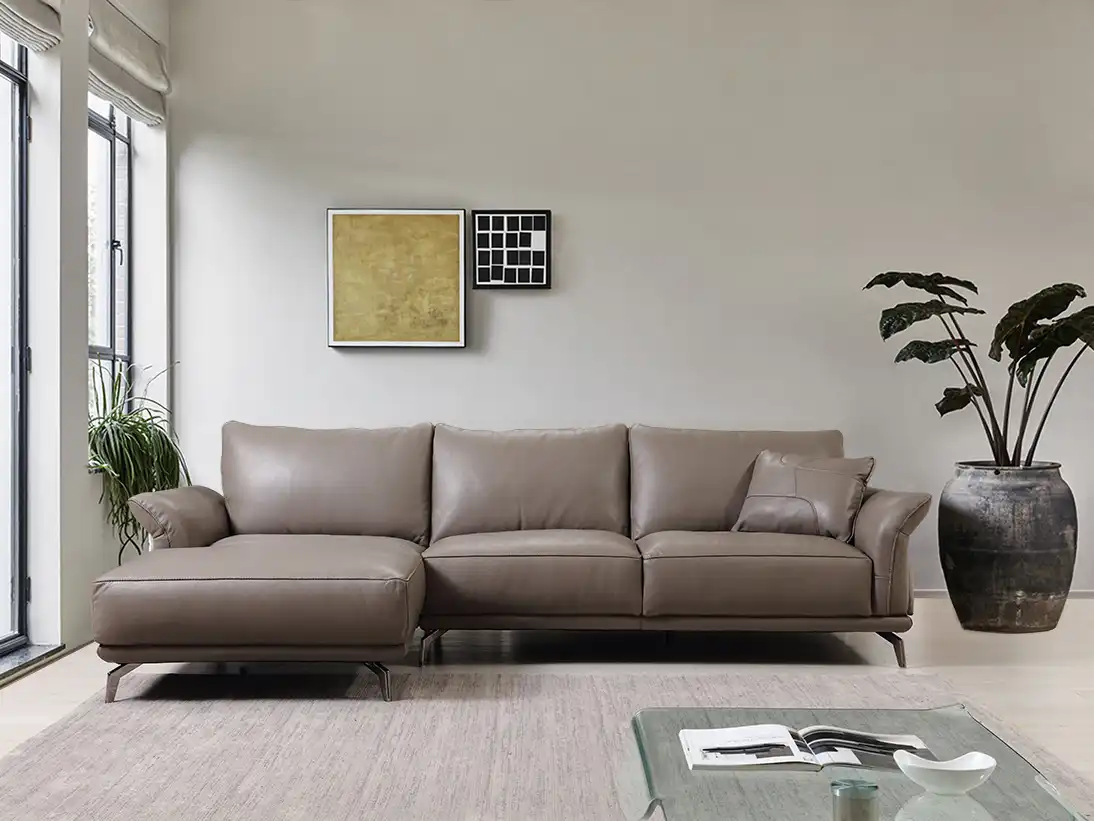
Leather sectional sofas with chaise lounges are flexible seating systems made up of standard horizontal sofa pieces that are joined together with long seats that are perpendicular to the sofa and intended to support your legs. This design solves problems with space flexibility by making the most of corner spaces and open floor plans. It also offers different sitting levels to suit the tastes of different users.
Core Design Components and Configurations
The structure of these sectionals is designed to be flexible. When looking at the piece from the front, you can tell if the unit is Left-Arm Facing (LAF) or Right-Arm Facing (RAF). The couch part sticks out from the main body, making a place to relax that feels like you're in a movie theater. Kiln-dried oak frames hold these buildings together. The moisture content is kept between 6 and 12 percent to keep the frames from breaking. The suspension base is made up of heavy-gauge sinuous springs or 8-way hand-tied coils, and the pillows are made of high-resiliency foam that is more than 2.0 lbs/ft³ dense. This engineering makes sure that the furniture keeps its shape even after thousands of sit-stand cycles, which are typical in business settings.
Material Advantages in High-Traffic Settings
When it comes to business settings, leather furniture is clearly better than fabric options. The smooth, non-porous surface doesn't let smells in and makes cleaning easier, which is very important in places like hotels and office environments with strict cleanliness standards. Full-grain leather is very expensive, but it gets a unique color over time and keeps its tensile strength. Top-grain options provide a corrected surface with protective coating, delivering superior stain resistance suited for environments with food service or high client interaction. Unlike microfiber or linen, leather can survive abrasion tests that often go over 50,000 Martindale cycles. This means that if it is properly kept, it will last for decades.
Spatial Adaptability Across Business Environments
These sectionals work great in a wide range of business settings. Executive hotel suites use them to make the rooms seem more expensive because leather is durable and can stand up to heavy business use while still looking brand new. Modular office work areas are useful because they can be rearranged as team structures change. When making model homes or business housing, real estate developers like how the large back profile divides spaces without using walls. This makes the living and dining areas visually separate in open-plan layouts.
How to Choose the Right Leather Sectional with Chaise Lounge for Your Business?
When choosing chairs for business-to-business use, you need to weigh the initial investment against the total cost of ownership. The choice goes beyond how something looks and includes things like material requirements, connection with other sizes, and source dependability. A leather sectional with chaise lounge requires careful evaluation of material specifications and dimensional compatibility.
Evaluating Leather Grades and Construction Quality
Not knowing how to classify leather can lead to mistakes that cost a lot of money. Full-grain leather keeps the original surface of the hide, which lets the leather breathe best through its obvious holes and gives it character over time. Top-grain has its surface fixed and given a protective finish, which makes it more regular and less likely to get scratches, which is helpful in places where people move around a lot or use rolling chairs. Split or bonded leather may seem like a good deal, but it usually starts to peel after three to five years, which lowers its long-term value. We suggest choosing aniline or semi-aniline dyes that protect well while still letting the leather breathe naturally.
Frame building needs to be looked at just as closely. Purchasing managers should make sure that sellers only use kiln-dried hardwood and not hybrid materials, since solid wood can handle the stress that comes from having many people using it at the same time. Metal ratcheting links between sectional pieces keep them from coming apart on smooth floors, which is a common problem in hotel setups with polished stone or wooden floors. High-density foam cores reduce the "puddling" effect that happens when leather bends too much and needs to be smoothed out often.
Dimensional Planning and Configuration Selection
When you plan your room well, you can avoid surprises on arrival day. Three times, measure the room's size, making sure to include doors, stairs, and hallways that the furniture will have to go through during installation. The legs of many commercial-grade sectionals can be taken off or the pieces can be put together in different ways to make them easier to move in small areas. The chaise usually adds 60 to 75 inches to the overall length, so make sure that your plan can handle this addition without getting in the way of traffic or hiding architectural features.
A lot of buyers don't understand how important orientation is. Check to see if your floor plan calls for a Left-Arm Facing (LAF) or Right-Arm Facing (RAF) arrangement by standing where guests will enter and writing down which side needs the chaise stretched. Reversible designs are more expensive, but they give you more options if you need to move or remake places. This makes them a good choice for businesses that are planning to grow in stages or set up temporary installations.
Supplier Vetting and Warranty Considerations
Partnering with a reliable provider protects your investment after the sale. Look at a manufacturer's production ability, safety certifications, and history of handling large orders when deciding which one to work with. International companies that offer ISO 9001 approval show that their quality management systems are uniform. REACH compliance proves that materials meet European safety standards for chemicals, which is important for buyers in North America who buy things from around the world. Suppliers that work with big stores like Walmart and Costco have shown that they can meet strict quality standards and delivery deadlines.
Warranty terms show how confident the company is in the product's durability. Frame guarantees for commercial-grade leather sectionals should last for 10 to 15 years, and seat warranties should last for 3 to 5 years. Make it clear what standard wear and tear and defects are, since business use is different from residential use. Flexible financing options make managing big projects' budgets easier, and they let you stock whole homes without using up all of your working capital.
Maintaining and Caring for Leather Sectional Sofas with Chaise Lounges
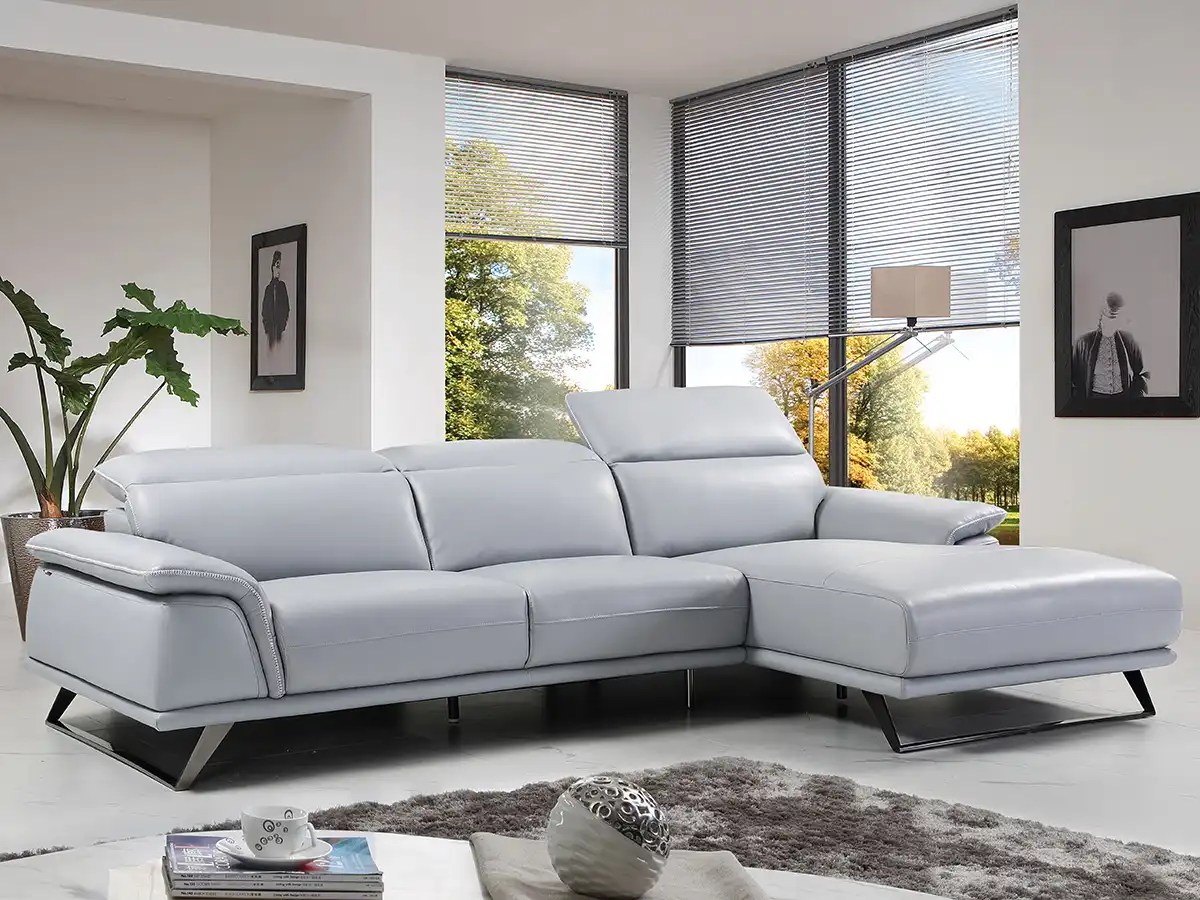
If you take care of your furniture the right way, it will last a lot longer and still look professional, which is why it costs so much. Commercial settings wear things down faster than household settings, so it's important to take preventative care for your leather sectional with chaise lounges.
Establishing Effective Cleaning Protocols
Leather needs to be cleaned in specific ways that are very different from how cloth is cared for. We suggest that you use pH-balanced leather cleaners instead of all-purpose cleaners that can remove the protecting oils. Microfiber cloths keep surfaces from getting scratched while you clean, and soft brushes can get into cracks where dirt and grime gather. Areas with mild traffic should be cleaned once a month, while areas with a lot of foot traffic should be cleaned once a week.
Spill response procedures keep lasting damage to a minimum. Instead of rubbing, which sends the wetness deeper into the leather, wipe up liquids right away with absorbent cloths. Specialized leather solvents that are applied lightly with cotton swabs can get rid of ink and grease spots. Putting cleaning methods in facility management manuals makes sure that they are always followed, even when staff changes, which helps your organization keep quality standards.
Environmental Controls and Preventive Measures
The structure of leather is seriously threatened by changes in humidity and temperature. Keep the relative humidity inside between 40 and 60% to stop cracking from being too dry or mold growth from being too wet. Avoid putting sectionals in full sunlight, as it fades colors and weakens leather over time. Window curtains that block UV rays provide extra safety in sun-filled rooms without blocking natural light.
Conditioning methods add back the oils that leather loses as it wears and dries out. Depending on the weather and how often the leather is used, conditioner should be used every 6 to 12 months. This preventative measure keeps the material flexible, so it doesn't crack like it does when it's not taken care of. Buildings with HVAC systems should keep an eye on the output vents because a lot of wind drying furniture nearby faster.
Long-Term Protection Strategies
In addition to regular cleaning, commercial settings gain from extra safety steps. Choose chair covers or throw blankets for couch sections in break rooms where people eat. This will make a barrier that can be taken off to clean up spills. Cushions should be rotated every three months to keep wear even and avoid the uneven fading and stiffness that show heavy use. Non-slip rubber pads on the feet of furniture keep sectional pieces from coming apart while they're being used, so the furniture keeps the unified look that customers expect.
Top Brands and Sourcing Options for Leather Sectional Sofas with Chaise Lounges
To be successful at procurement, you need to find sellers whose skills match your quality standards, price, and delivery schedules. There are a lot of different choices in the business furniture market for leather sectional with chaise lounges, from well-known retail names to specialized contract manufacturers.
Established Market Leaders
Ashley Furniture has a good image because it makes a lot of furniture and sells it all over the world. Its prices are also reasonable for normal configurations. Their commercial section has programs for buying in bulk with tiered discounts that help developers of more than one building. Pottery Barn is popular with people who care about how things look because it has carefully chosen sets that reflect the latest trends in home decor. Their "white-glove" shipping services make operations easier for high-end hospitality projects that need to be installed precisely.
Wayfair has changed the way people usually shop by using digital tools that make it easier to compare prices and place orders. Their business accounts come with specialized help and flexible return policies that make buying from them less risky. IKEA sells modular systems that are easy to put together on your own for people on a budget, but this method might not work for projects that need professional installation or white-glove service.
Specialized Contract Manufacturers
When you work directly with contract furniture makers, you can make changes that you can't make through retail outlets. Manufacturers who focus on business and hotel projects know what institutional buyers need, from flame-retardant certifications to custom size requirements. Through OEM partnerships, you can create unique designs that set your brand apart, making environments that both customers and workers will remember.
A lot of Chinese makers are based in Foshan. They offer great deals because they can combine improved production with low prices. When suppliers keep working with big Western stores, it shows that they can meet quality and safety standards around the world. Misaligned expectations that delay projects can be avoided by being clear about wait times, minimum order amounts, and customization options.
Evaluating Sourcing Strategies
Local sourcing makes transportation easier and lets you visit the store to see the product in person before making a big purchase. When compared to foreign options, domestic providers may be more expensive, but they usually offer faster delivery and easier warranty service. If you do your research, buying from known sellers in other countries can save you money without sacrificing quality. Before placing large orders, ask for examples to make sure that the production units meet your needs. Ask the seller for examples from clients who have worked on projects of a similar size to yours to see how well they've done with complex installations and customer service after the sale.
Online business-to-business (B2B) tools make it easier to find suppliers and compare prices, but relationships formed at furniture shows usually lead to better terms. You can check the quality of the making directly at trade shows, meet the production teams, and talk about terms in person. Visits to factories show you how they work and how they check the quality of their products, which gives you faith that they can consistently meet your needs.
Making the Decision: Pros, Cons, and Final Recommendations
You can see a clear return on your investment in leather sectional with chaise lounges if you choose them carefully. Knowing both the pros and cons of a choice makes sure that it fits with operational facts and financial goals.
The longer repair cycles of high-quality leather sectionals make up for their higher starting costs. In business settings, cloth sofas might need to be replaced every 5 to 7 years, but leather sofas that are well taken care of can last 15 to 25 years. Because it lasts longer, the annualized costs are cheaper, even though the buying price was higher. The professional look helps build brand recognition, which is especially helpful in places where people will be seeing the furniture and hearing about the company's beliefs. When compared to cloth options that need to be deep cleaned or stained often, leather's low upkeep costs lower ongoing labor costs.
But obstacles should be thought about. Premium leather sectionals need a lot of money up front, which can put a strain on project budgets. The material needs to be maintained regularly to keep it from breaking down, which means that staff needs to be trained and the right cleaning products need to be supplied all the time. Because leather doesn't absorb heat, it feels cool at first and might not be as comfortable in climate-controlled rooms as fabrics that do.
Before asking for quotes, you should make a list of specifics, such as the type of leather, frame materials, cushion depth, and guarantee terms. Give priority to suppliers who can make changes, since standard sizes rarely work perfectly in all business areas. Instead of just looking at the purchase price, figure out the total cost of ownership over the predicted lifespan. This includes care costs and how often the item needs to be replaced. Before placing a big order, you can use pilot projects with single units to test the reliability of the supplier and the performance of the product.
Conclusion
Leather sectional with chaise lounges are a great investment for businesses because they combine classic style with useful usefulness. These pieces can stand up to a lot of use and still look polished, which makes business and dining areas look better. The flexible design lets you set up different plans, so you can change the space as your business needs change. When buying things, people have to weigh the initial cost against how well they will last over time. Leather sectionals that have been carefully chosen end up being the most cost-effective option because they need less repair and upkeep over time. To have a successful implementation, you need to carefully choose your suppliers, pay close attention to the material specs, and follow the upkeep procedures that will protect your investment for decades to come.
FAQ
Q1: What is the expected lifespan of a leather sectional with chaise lounge in commercial use?
A: In business settings, good leather sectionals with chaise lounges with kiln-dried wooden frames and top-grain upholstery usually last between 15 and 25 years. Longevity varies on the type of leather, how often it is used, and how well it is taken care of. In three to five years, bonded leather options may start to peel and crack. Conditioning every 6 to 12 months stops the drying that leads to failure too soon. For areas with a lot of foot traffic, it's best to choose commercial-grade building with stress points that are strengthened and heavy-duty suspension systems that are made for institutional use.
Q2: How do we tell the difference between Left-Arm Facing and Right-Arm Facing configurations when ordering?
A: To find the orientation, stand in front of the couch and face it as if you are going to sit down. Right-Arm Facing (RAF) means that the couch arm is on your right side when you stand in front of the piece. On the other hand, chair arms on your left show that you are Left-Arm Facing (LAF). This is the most common mistake people make when they order business furniture. Always compare the orientation of the space to floor plans, blueprints, and photos of the real space, making note of the entry points and viewing angles that decide the best layout.
Q3: What cleaning strategies work best for leather sectionals in business environments?
A: Cleaning leather once a month with pH-balanced cleaners and cotton cloths keeps it looking good in areas with mild traffic, and once a week is best for areas with a lot of traffic. Responding right away to a spill keeps it from leaving a lasting mark; blot rather than rub liquid spills. Conditioning leather every six to twelve months restores its natural oils. Don't use general cleaning products that have strong solvents in them that can damage leather finishes. Write down cleaning procedures in building management systems so that they are always followed, even when staff moves and when the cleaning is done in more than one place.
Partner with Kanas for Premium Leather Sectional Solutions
Kanas Furniture specializes in making leather sectional with chaise lounge solutions that are commercial-grade and made for tough B2B environments. Our 40,000㎡ factory in Foshan uses both high-tech machines and trained workers to make furniture that meets international quality standards and has ISO 9001 certification. As a trusted provider to global retailers like Walmart and Costco, we know how hard it is for hotel builders, office space planners, and furniture importers to find the right furniture.
Because we offer OEM and ODM services, we can make configurations that are exactly what you need in terms of size, leather, and style. We keep a strong bulk supply capacity and stick to our delivery dates. Our thorough quality control makes sure that all of our big orders are the same. Our team can help you with the whole buying process, whether you're furnishing hotel rooms, business lobbies, or housing developments. Email us at sc@kanasfurniture.com to talk about how our leather sectional options can make your business rooms look better and help you get the most out of your investment.
References
1. Anderson, M. (2021). Commercial Furniture Selection: A Guide for Procurement Professionals. Hospitality Design Press.
2. Chen, L., & Roberts, K. (2022). "Material Performance in High-Traffic Environments: Comparative Analysis of Upholstery Options." Journal of Interior Design Research, 48(3), 112-128.
3. Furniture Industry Research Association. (2023). Standards and Best Practices for Contract Furniture Manufacturing. Industry Standards Publication.
4. Harrison, P. (2020). Leather Care and Maintenance in Commercial Settings. Facilities Management Institute.
5. Thompson, R., & Williams, S. (2022). "Total Cost of Ownership Models for Commercial Furniture Procurement." International Journal of Facility Management, 15(2), 67-84.
6. Walsh, D. (2023). Modern Sectional Design: Engineering Comfort and Durability. Furniture Design Quarterly Publications.
Learn about our latest products and discounts through SMS or email