- English
- French
- German
- Portuguese
- Spanish
- Russian
- Japanese
- Korean
- Arabic
- Greek
- German
- Turkish
- Italian
- Danish
- Romanian
- Indonesian
- Czech
- Afrikaans
- Swedish
- Polish
- Basque
- Catalan
- Esperanto
- Hindi
- Lao
- Albanian
- Amharic
- Armenian
- Azerbaijani
- Belarusian
- Bengali
- Bosnian
- Bulgarian
- Cebuano
- Chichewa
- Corsican
- Croatian
- Dutch
- Estonian
- Filipino
- Finnish
- Frisian
- Galician
- Georgian
- Gujarati
- Haitian
- Hausa
- Hawaiian
- Hebrew
- Hmong
- Hungarian
- Icelandic
- Igbo
- Javanese
- Kannada
- Kazakh
- Khmer
- Kurdish
- Kyrgyz
- Latin
- Latvian
- Lithuanian
- Luxembou..
- Macedonian
- Malagasy
- Malay
- Malayalam
- Maltese
- Maori
- Marathi
- Mongolian
- Burmese
- Nepali
- Norwegian
- Pashto
- Persian
- Punjabi
- Serbian
- Sesotho
- Sinhala
- Slovak
- Slovenian
- Somali
- Samoan
- Scots Gaelic
- Shona
- Sindhi
- Sundanese
- Swahili
- Tajik
- Tamil
- Telugu
- Thai
- Ukrainian
- Urdu
- Uzbek
- Vietnamese
- Welsh
- Xhosa
- Yiddish
- Yoruba
- Zulu
Top Modern Designs for Leather Power Reclining Sectionals
The Leather Power Reclining Sectional is a complex combination of high-end upholstery and electrical engineering. It has motorized motion mechanisms built into flexible designs that can be used in a variety of business settings. This furniture system solves important buying problems by mixing the space-saving benefits of sectional plans (L-shape, U-shape, or chaise configurations) with the comfort of motorized chairs. These sectionals are both aesthetically pleasing and long-lasting, so they can be used in commercial spaces with a lot of foot traffic where comfort and dependability are important. The adjustable seating angles help reduce static fatigue while keeping the sleek look that modern interior design demands.
Introduction
In modern business and hospitality spaces, seating options that look good and work well are becoming more and more important. Leather Power Reclining Sectionals have become necessary furniture in executive lounges, hotel lobbies, high-end waiting areas, and corporate rest areas. This is because first impressions and long-term comfort have a direct effect on customer happiness and business success. It's not enough to just look at how something looks on the surface; you also need to carefully consider optimal support systems, long-term durability measures, and how well it fits with your overall interior design goals.
To make sure that goods meet strict business standards, it's important to work with reliable manufacturers and use new production technologies. This detailed guide helps B2B buying workers make smart choices by highlighting important features, the newest innovations, and useful things to think about that affect total cost of ownership. We'll talk about how trustworthy sellers with a track record of making leather furniture can help you reach your buying goals by offering flexible solutions that meet international standards and providing full support after the sale.
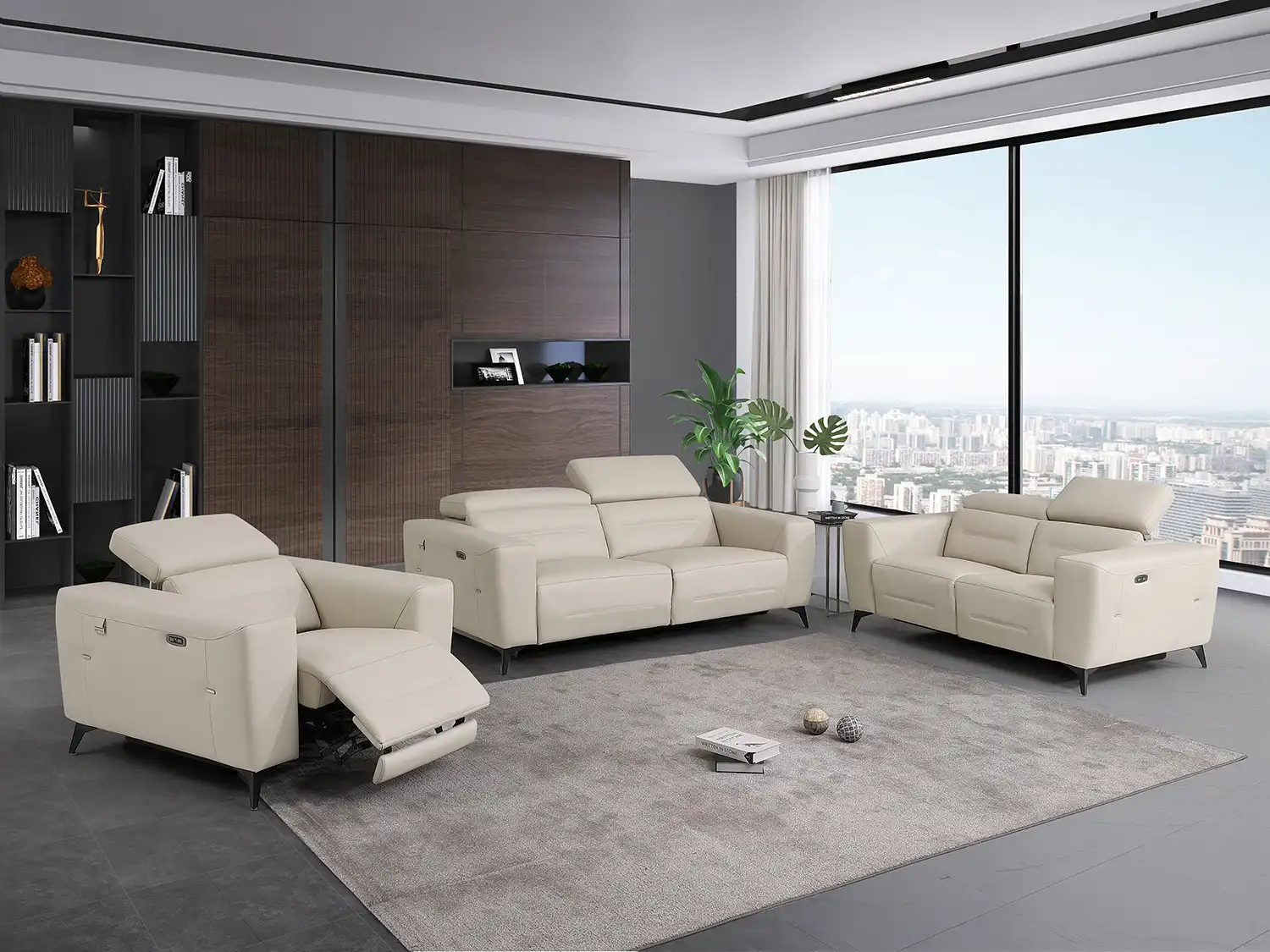
Understanding Leather Power Reclining Sectionals: Features and Benefits
Core Operational Mechanisms and Motor Functionality
Leather Power Reclining Sectionals have high-tech controlled systems that completely change how people sit in business settings. Low-voltage DC motors (usually 24V) power these units and use precision-engineered joints to move the footrests, backrests, and adjustable headrests. Leading makers get their parts from dependable OEM providers that can make systems that can work smoothly for at least 25,000 rounds. This makes sure that the products last in high-use areas like airport VIP rooms or executive office waiting areas.
The technology includes zero-wall or wall-hugger design, in which the seat slides forward on metal tracks when it is lowered, needing only 2 to 4 inches of space between it and the wall. This clever use of space solves a major problem in business design: making the most of useful floor space without giving up the ability to recline. Control tools have changed over time to include wireless remotes, touch-panel switches built into armrests, and more and more, smartphone apps that connect to the system and let facility managers set the best settings for each type of user.
Ergonomic Design Principles for Commercial Applications
Power Reclining Sectionals are built in a way that makes them more comfortable than just adjusting the angle. Modern designs have separate power headrests and lumbar support systems that work with multi-switch control screens. This lets users fine-tune their position for long amounts of time spent sitting. This feature is especially useful in places where people sit for long periods of time, like business meeting lounges, movie rooms in hospitality suites, or patient family areas in healthcare facilities.
Ergonomic chair research shows that positions that can be changed help blood flow and reduce muscle pain when sitting for long periods of time. When it comes to stopping, motorized systems are better than standard hand switches because they can go in an endless number of places. Memory foam cushioning choices and high-resilience polyurethane layers spread weight evenly and keep the structure strong even after thousands of reclining cycles. These kinds of technical features have a direct effect on how happy users are and how often they need to replace furniture, which leads to higher lifecycle value.
Material Advantages and Maintenance Efficiency
When longevity and appearance retention are very important in a business setting, leather upholstery is clearly better than cloth options. Top-grain or full-grain leather with a thickness of 0.9mm to 1.4mm is used to make high-quality sectionals. This makes the leather resistant to breaking, punctures, and the normal wear and tear that comes from having different people use it. Commercial-grade leather is tanned in ways that make it more flexible and stop it from cracking when it is moved mechanically over and over again.
The care instructions for leather sectionals are easier to follow than those for cloth ones. Spills can be cleaned up without damaging the surface, which is important for healthcare and dining settings where stain and smell retention is a problem. Using pH-balanced leather care items on a regular basis to prepare leather keeps it soft and stops it from aging too quickly. Environmental factors that keep humidity levels between 40 and 55% and temperature ranges between 65 and 75°F create the best conditions for leather to stay in good shape for longer.
Energy Efficiency in Sustained Commercial Use
One element of buying power-reclining furniture that is often ignored is how much energy it uses. Modern automatic devices use very little power when they're not in use; when they're not in use, they usually use less than 0.5 watts per unit. This efficiency leads to measured practical cost saves over multi-year usage cycles when sectionals are chosen for setups with multiple units, like airport lounges or hotel relaxation areas.
Some makers now offer battery pack options that get rid of the risk of tripping over cords in business areas with a lot of foot traffic while also providing temporary power when the power goes out. Solar power is now being used in some specific situations, like at outdoor events or in environmentally-friendly business buildings that want to get LEED certification points. These new ideas are in line with more and more buying rules that require sustainability and total environmental impact assessment.
Top Modern Designs and Styles in Leather Power Reclining Sectionals
Technology Integration and User Convenience Features
The fact that USB charging ports and wireless charging pads are built in shows that connection is now essential in modern business settings. Modern Leather Power Reclining Sectionals have USB-A and USB-C ports built right into the armrests or center sections. This means that users don't have to look for wall plugs and there are fewer cords in public areas. Some more advanced models have overload safety circuits to keep connected devices safe, which takes care of legal concerns in public sites.
Cup holders and storage consoles represent another practical design evolution, particularly relevant for entertainment venues, hotel lounges, and executive relaxation areas. These features are designed to keep spills from getting to the fabric or motor parts, often incorporating removable liners for simplified cleaning. Hidden storage compartments within console sections provide secure locations for remote controls, reading materials, or personal items, enhancing the user experience while maintaining clean sight lines.
Configuration Options: Chaise Versus Non-Chaise Designs
Chaise sectionals feature extended footrest sections that provide full leg support without the need for powered movement. This set-up works great in places where people want to relax for a long time, like spa waiting rooms, high-end private clubhouses, or boutique hotel suites. When compared to normal armchair-style terminations, the chaise design usually adds 18 to 24 inches to the overall length. This means that careful space planning is needed when purchasing.
Non-chaise configurations offer greater modularity and compact footprints suitable for smaller lounges or areas where traffic flow patterns demand more open floor space. These designs often incorporate Ottoman components that can be repositioned as needed, providing flexibility for venues that host varied event types or need to reconfigure seating arrangements seasonally. The choice between configurations should align with measured floor dimensions, anticipated occupancy patterns, and the operational flexibility required by facility management teams.
Trending Colors and Finishes for Contemporary Commercial Interiors
Color psychology and finish selection significantly impact the perceived atmosphere of commercial spaces. Charcoal gray, warm taupe, and soft slate are some of the most popular neutral tones for 2024. They make for flexible backgrounds that go with a wide range of design styles and hide small wear patterns in high-traffic areas. It's important for hospitality places that depend on looks to bring in guests that these shades look good in photos used for marketing.
White and light cream leather choices keep showing up in high-class places where the statement value makes up for the extra care that's needed. Newer hydrophobic coats and UV-stabilized dyes have solved problems with staining and yellowing, which makes lighter finishes more useful for business uses. Espresso and cognac browns are darker shades that offer a more traditional look. They are good for executive offices, private clubs, and high-end hotel libraries where a classic look fits with the brand's image.
Modular Flexibility and Custom Layout Capabilities
Modular sectional systems let buying teams choose exact configurations that work with the building's restrictions. Each part—armless chairs, corner wedges, chaise ends, and storage consoles—connects to the others using hidden bolts and alignment pins. This creates a smooth look while still allowing plans to be changed as needed. This adaptability is very helpful for places that are used for more than one thing, for seasonal changes, or for buildings that are getting repairs in stages.
Dimensional requirements can also be included in custom layouts for OEM and ODM purchases. Advanced manufacturers can change the lengths of the seats, the heights of the backrests, and the sizes of the armrests to meet the needs of different user groups or brand standards. This kind of customization makes sure that sectionals work well with other furniture sets and meet the ergonomic needs of the people you're creating for, whether you're making senior offices or public-facing dining spaces.
Comparing Leather Power Reclining Sectionals With Alternatives

Power Versus Manual Reclining Mechanisms
To change settings on a manual chair, the user has to apply physical force to a handle that controls a mechanical linkage. Manual systems have some problems that make them less useful in business settings, even though they are cheaper to buy at first. The physical effort needed makes it harder for older people or people who have trouble moving around to use, which could cause problems with following ADA rules in public places. Leather Power Reclining Sectionals deliver consistent operation regardless of user strength or technique, ensuring uniform experiences across diverse populations.
The motorized action gets rid of the jarring movements that come with releasing a button by hand. This makes the changes smoother, which improves the perceived quality. According to data from commercial installations, properly specified power mechanisms need less service visits than manual equivalents. This is because consistent motor operation lowers stress on structural joints and keeps calibrated positioning over long periods of time.
Leather Versus Fabric Upholstery: Durability and Lifecycle Economics
When compared to leather upholstery choices, fabric upholstery options usually have 20–35% lower original purchase costs. This creates clear budget benefits that deserve more attention. Because fabric materials soak up liquids, smells, and dust, they need to be professionally cleaned more often to meet cleanliness standards in business settings. When you add up the costs of cleaning and replacing furniture earlier because of obvious wear patterns, the total cost of ownership is often higher over the normal 7–10-year lifecycle of commercial furniture.
Leather surfaces don't let stains stick and are easy to clean with a damp cloth. This means that they last longer and look good for longer, lowering your care costs. The antimicrobial qualities of the material help meet cleanliness goals in healthcare waiting areas and bars next to food service areas. Even though leather is used a lot in business and leisure settings, it doesn't wear down easily. It can handle the pressure loads that come from frequent use. Leather's high price point is often supported by procurement studies that look at these lifetime factors.
Bonded Leather Versus Top-Grain Leather Quality Distinctions
Bonded leather is made up of leather scraps and strands that are glued together with polyurethane on top of a cloth backing. This makes a composite material that is only about 17% leather by weight. The price of bonded leather is much lower than real leather, but it doesn't last as long, so it can't be used in business settings where service lives are expected to be several years. Under normal conditions, the material tends to crack, peel, and delaminate within two to three years.
Top-grain leather is the second-best quality. The top layer of hide is lightly scraped to get rid of any flaws before it is given a protected finish. This process gives the leather a uniform look and makes it more resistant to stains, but it keeps a lot of the natural strength and flexibility that make leather unique. Top-grain standards are the best mix for business purchases because they offer real leather performance and looks at more affordable prices than full-grain alternatives. The extra money spent on genuine leather over bonded leather is worth it because it lasts longer and looks better, which helps an expensive brand's image.
Professional Installation Services and After-Sales Support Value
Leather Power Reclining Sectionals involve considerable weight and complex electrical components that require proper handling and connection procedures. Manufacturers offering professional installation services through trained technician networks eliminate risks associated with improper assembly that can void warranties or compromise mechanical performance. Professional installers verify electrical connections meet local codes, ensure proper wall clearances for reclining operation, and test all motorized functions before final acceptance.
Comprehensive after-sales support packages distinguish reputable suppliers from commodity vendors. Service agreements that include periodic maintenance visits, rapid-response repair capabilities, and parts availability guarantees protect procurement investments against operational disruptions. These support structures prove particularly valuable for multi-location hospitality and corporate clients managing standardized furniture specifications across dispersed facilities, where consistent service quality and replacement part compatibility streamline facilities management operations.
How to Choose the Best Leather Power Reclining Sectional for Your Business?
Segmenting Client Needs Across Key Decision Dimensions
Commercial procurement for Leather Power Reclining Sectionals must address four primary need categories. Comfort needs are very different depending on the setting. For example, senior office rooms may favor long-term seating for long meetings, while hotel lobbies need appealing perching choices for shorter wait times. Understanding typical usage durations and occupant demographics informs appropriate cushioning densities, lumbar support specifications, and seat depth selections.
Style considerations reflect brand identity and architectural contexts. Contemporary minimalist interiors demand clean lines and neutral palettes, while traditional club atmospheres may specify tufted backs and rich cognac finishes. Technology integration needs differ dramatically between corporate environments requiring extensive charging capabilities and residential-style hospitality lounges where visible technology detracts from relaxation atmospheres. Durability specifications must account for anticipated usage intensity, with airport lounges requiring heavy-duty mechanisms rated for continuous operation versus executive suites experiencing intermittent use patterns.
Spatial Planning and Operational Alignment
Accurate dimensional assessment prevents costly specification errors. Procurement teams should obtain detailed floor plans showing wall locations, traffic pathways, architectural columns, and door swing clearances. Sectional configurations must accommodate these constraints while maintaining appropriate circulation space—typically 30-36 inches for primary walkways. The zero-wall clearance capabilities of modern power recliners enable placement against walls, maximizing usable square footage in space-constrained environments.
Operational considerations include electrical infrastructure requirements. Each motorized section requires dedicated power connections, necessitating either floor outlets positioned appropriately or professional wiring modifications. Battery pack options eliminate these constraints but introduce periodic recharging requirements into maintenance protocols. Facilities management teams should evaluate whether centralized power distribution or distributed battery systems better align with operational capabilities and long-term maintenance preferences.
Commercial Considerations: Financing, Warranties, and Service Agreements
Flexible financing options can facilitate larger procurement initiatives or enable phased implementation strategies that distribute capital expenditures across multiple budget cycles. Manufacturers offering structured payment terms, volume discounts for multi-site purchases, or lease-to-own programs provide procurement flexibility particularly valuable for expanding hospitality groups or corporate campus developments.
Warranty coverage represents a critical quality indicator and cost protection mechanism. Comprehensive commercial warranties should cover frame structures for 10+ years, motorized mechanisms for 5+ years, and upholstery for 3+ years, with clear language defining covered components and exclusions. Extended warranty options provide additional protection justifiable for high-visibility installations or budget-constrained facilities where unplanned replacement expenses create significant disruptions.
After-sales service packages that include preventive maintenance visits, priority repair response, and parts replacement guarantees transform transactional purchases into partnership relationships. These service structures prove particularly valuable for procurement teams managing furniture portfolios across multiple locations, standardizing maintenance protocols and ensuring consistent operational readiness throughout asset lifecycles.
Maintenance and Troubleshooting: Maximizing the Lifespan of Your Leather Power Reclining Sectionals

Leather Care Protocols and Environmental Management
Setting up regular cleaning plans for your Leather Power Reclining Sectional keeps oils, dirt, and other natural contaminants from building up and speeding up wear and tear. As part of daily upkeep, microfiber cloths should be used to remove dust from the surface. As part of the weekly routine, pH-neutral leather cleaners are used to wipe the leather damply with soft cloths, followed immediately by drying to avoid water spots. Do not use harsh chemical cleaners, items with ammonia, or too much water, as these can remove protected finishes or soak up substrates.
Quarterly conditioning treatments using quality leather products restore moisture and maintain suppleness. Apply conditioner sparingly with soft applicator pads, allowing 15-20 minutes absorption time before buffing away residues. This schedule adjusts based on environmental conditions—drier climates may require monthly conditioning, while humid environments extend intervals. Environmental controls maintaining 40-55% relative humidity and temperatures between 65-75°F create optimal preservation conditions, preventing excessive drying or moisture exposure that causes cracking and mold growth respectively.
Mechanical System Inspection and Preventive Maintenance
Regular motor checks find problems before they get so bad that they stop working. Visual checks should be done once a month to look for damage in the power lines, make sure the electrical connections are safe, and test all motorized functions by fully reclining. Listen for strange sounds like grinding, clicking, or motor strain sounds. These could mean that the parts aren't lined up right or are wearing out and need professional help.
As part of every three months' maintenance, mounting brackets and connection points are checked for looseness, fasteners are tightened to the manufacturer's specs, and the frame's structural stability is checked. To keep things running smoothly and cut down on wear, lubricate mechanical pivot points with products that the maker recommends. Professional annual inspections by experienced techs provide comprehensive system evaluations, motor performance testing, and calibration adjustments that extend mechanism lifespans and maintain optimal operational performance.
Common Issues: Troubleshooting and Resolution Strategies
The most common technical problem is a motor that stops working. This can be caused by an electricity interruption, overloading, or normal wear and tear. If the motors don't work, check the power lines, use different devices to try the wall outlets, and look at the inline fuses or circuit breakers. If power generation is confirmed to be normal, the motor needs to be replaced by a trained expert. Keeping spare motors on hand or setting up quick-access parts buying can help keep key business applications from going down.
Leather surface issues—cracking, fading, or peeling—typically indicate environmental stress or inadequate maintenance. Cracking results from excessive dryness and insufficient conditioning; increase conditioning frequency and improve humidity controls. Fading indicates UV exposure; relocate sectionals away from direct sunlight or install UV-filtering window treatments. Peeling suggests bonded leather or low-quality materials; these situations require upholstery replacement with higher-grade leather specifications.
Cost-Benefit Analysis: Repair Versus Replacement Decisions
Systematic review systems help people choose between spending money to fix things and buying new ones. Figure out fix costs as a portion of replacement costs. If repairs cost more than 40 to 50 percent of replacement costs, it's usually better to buy new, especially if the old units have already lived 60% or more of their expected lifetimes. Consider whether the repairs are meant to fix single problems or show signs of general deterioration that more problems are about to happen.
Evaluate operational context impacts: high-visibility installations where appearance directly affects brand perception may justify earlier replacement despite functional adequacy. Conversely, back-of-house applications can tolerate aesthetic imperfections if functionality remains intact. Factor in technology obsolescence—older sectionals lacking integrated charging or modern safety features may warrant replacement to meet evolving user expectations and regulatory requirements.
Conclusion
Luxury Leather Power Reclining Sectionals are stylish ways to sit that combine good looks with good ergonomics, making them perfect for busy business settings. For buying to go well, motorized systems, upholstery quality, space configurations, and lifetime cost factors that determine operating value must all be carefully looked at. Knowing the differences between manual and power systems, leather grades, and flexible design options helps you make smart standard choices that meet the needs of your business.
Partnering with experienced manufacturers offering comprehensive support—from customization capabilities through installation services and ongoing maintenance programs—transforms furniture procurement from transactional purchases into strategic relationships supporting long-term operational objectives. The investment in quality leather power reclining sectionals returns measurable value through enhanced user satisfaction, reduced maintenance burdens, extended replacement cycles, and preserved brand image in customer-facing environments.
FAQ
Q1: What is the expected lifespan of commercial-grade leather power reclining sectionals?
A: When properly cared for, commercial-grade sectionals made with top-grain leather, wooden frames, and high-quality motorized systems can last between 10 and 15 years with normal use. Installations that get a lot of use may last between 7 and 10 years, while executive rooms that don't get used as often can last longer than 15 years. Regular conditioning, controlling the surroundings, and preventative technical repair all have a big effect on how long something lasts.
Q2: Are energy-efficient models available for large-scale installations?
A: Modern power reclining systems have motors that use very little power when they're not in use and even less when they're not. Some makers make battery packs that don't need to be charged all the time, and sun charging is becoming more common for certain uses. These standards help achieve sustainability goals and lower running costs in large-scale business or hospitality setups.
Q3: What customization options exist for bulk or OEM orders?
A: Reputable makers offer a wide range of customization options for large purchases, such as changing the sizes, choosing the leather grade and color, specifying the mechanism, and adding technology features. OEM and ODM services can meet brand-specific needs by creating custom stitching patterns, embroidered names, proprietary color matching, and unique combinations that fit specific building limits. Depending on how complicated the design is, the minimum order quantity is usually between 50 and 200 units.
Q4: How do warranty terms differ between residential and commercial specifications?
A: Commercial warranties usually cover more because they expect heavy use. Frame warranties last 10 years or more, mechanism warranties last 5 to 7 years, and fabric warranties last 3 to 5 years. Most residential guarantees have shorter terms. To avoid coverage disputes, commercial specs should have clear wording about multi-shift usage, public access settings, and what the maintenance requirements are.
Partner with Kanas for Premium Leather Power Reclining Sectional Solutions
Kanas Furniture delivers exceptional Leather Power Reclining Sectional solutions tailored specifically for B2B procurement professionals seeking reliable quality, competitive pricing, and comprehensive support services. As a leading manufacturer headquartered in Foshan—China's premier furniture production hub—we operate a 40,000㎡ state-of-the-art facility equipped with advanced manufacturing systems and staffed by 400+ skilled professionals dedicated to precision craftsmanship.
Comprehensive support distinguishes our client relationships: professional installation services through trained technician networks, flexible financing arrangements accommodating diverse budget structures, extended commercial warranty coverage protecting your investment, and dedicated after-sales support ensuring operational continuity throughout product lifecycles. Our streamlined logistics capabilities deliver reliable shipment schedules to North America, Europe, Australia, and beyond, backed by export documentation expertise simplifying international procurement processes. Contact our expert team at sc@kanasfurniture.com to discuss your specific requirements and discover how Kanas transforms furniture procurement into strategic partnerships supporting your business success.
References
1. Morrison, T.R. & Chen, L. (2023). Commercial Furniture Specification: Engineering and Design Principles for High-Traffic Environments. Furniture Design Press.
2. Patel, S.K. (2024). "Leather Processing Technologies and Durability Metrics in Commercial Upholstery Applications." Journal of Materials Science in Furniture Manufacturing, 18(2), 145-167.
3. Anderson, M.J. & Fujimoto, K. (2023). Ergonomic Seating Systems: Biomechanical Considerations for Extended Use Applications. Industrial Ergonomics Institute.
4. Williams, D.P. (2024). "Lifecycle Cost Analysis Frameworks for Commercial Furniture Procurement." Facilities Management Quarterly, 31(1), 78-94.
5. Roberts, G.H. & Martinez, A.L. (2023). Motorized Furniture Mechanisms: Engineering Standards and Reliability Testing Protocols. Technical Publishing International.
6. Thompson, R.C. (2024). "Sustainable Practices in Commercial Leather Furniture Production and Procurement." Journal of Sustainable Business Operations, 12(3), 201-223.
Learn about our latest products and discounts through SMS or email